IMSA.com Contributor Says Record TV Numbers Are Proof that Excitement is Growing
By Jeff Olson
DAYTONA BEACH, Fla. – Some folks are old enough to remember when Danny Ongais parked the Interscope Racing Porsche 935 on the apron late in the Rolex 24 At Daytona in 1979 and waited to coast across the finish line.
The car’s turbo had failed with 10 minutes remaining in the race, so Ongais parked on the apron just short of the finish line and waited until the final seconds ticked away, then was pushed across the finish line to share victory with co-drivers Ted Field and Hurley Haywood.
Ongais could pull off that trick because he was 49 laps ahead of the closest challenger. It wasn’t the only show of dominance from way-back versions of the Rolex 24. In 1970, the margin was 40 laps. Three other times, the winner held a lead of 30 laps or more.
Yes, there was a time when the Rolex 24 wasn’t so close, but those days are in the rearview. The modern race – mostly because of the impeccable reliability of contemporary sports cars – measures its winning margins in seconds, not laps.
As other statistics show, the present-day Rolex 24 measures its popularity in eyes on the screen. And those numbers aren’t small.
NBC Sports reported Wednesday that its weekend telecast of the famous endurance race broke records for viewership. Sunday’s final two hours on NBC averaged 1.23 million viewers, a 23 percent increase from 2020. It was the most-watched IMSA race in NBC history and the largest audience since the 2008 race, which was shown on FOX.
Those numbers follow a 21 percent increase in season-long viewership from 2019 to 2020. In an email to series stakeholders heralding the NBC numbers, IMSA President John Doonan called it “nothing short of sensational.”
He’s right. Showing a 24-hour motor race is one thing. Showing it in a way that makes people want to watch it is another thing altogether.
The increase in viewership speaks to the on-track product, the participants and the broadcast partner. The race was entertaining, of course, but so was the way it was presented. From start to finish across three platforms, NBC managed to tell the story of this unusual event in a way that informed the most passionate of fans while making it entertaining and understandable to the casual observer.
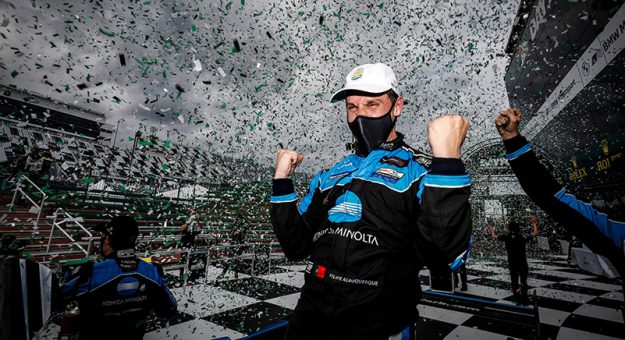
Ongais’ park-and-wait strategy in 1979 was the story of that race, a performance so dominant that the coast-across-the-line at the end became the headline. Forty-two years later, the entire 24-hour race came down to a lively duel between Filipe Albuquerque and Renger van der Zande.
Even after a punctured tire sent van der Zande to the pits and ended Sunday’s drama, the final winning margin between Albuquerque and Kamui Kobayashi was just 4.704 seconds. In four of the five classes, the runner-up was on the lead lap, just seconds behind the winner. Not 49 laps behind. Seconds behind.
That, in part, explains the million-plus audience. Nothing short of sensational, indeed.